



Need professional help with addiction?
Addiction Recovery & Detox FAQs
Drug & Substance Abuse FAQs
Table of Contents
Key Points
- There are several types of support groups available in Raleigh, including 12-step programs, non-12-step alternatives, and peer-led mental health support groups.
- Some common recovery meeting formats in Raleigh include Alcoholics Anonymous (AA), SMART Recovery, Refuge Recovery, and NAMI Wake County's programs for people and their families affected by mental illness.
- Meetings can be attended either in-person at churches, community centers, and other locations in Raleigh, or remotely, depending on the format offered.
- Support groups provide accountability, coping mechanisms that will help you maintain your recovery over time, and a sense of community that strengthens recovery.
- Family members and caregivers have their own support options, including NAMI Connection and Al-Anon.
- Recovery meetings are best used as part of an overall recovery program, meaning they should be used to supplement, not replace, your formal treatment.
Why Support Groups Matter in Recovery
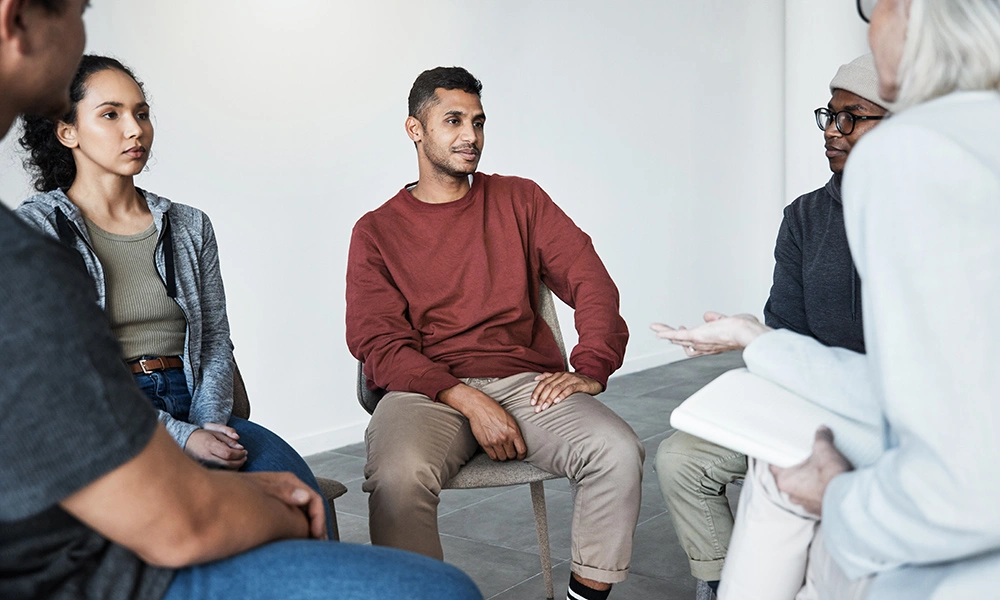
No one recovers alone. Whether it is from a substance use disorder or a mental health condition like depression or anxiety, having a community of people who understand what you’re going through is crucial to recovery. Support groups in Raleigh can provide people with that supportive community, as well as the practical tools needed to manage daily challenges.
These support groups are offered in a variety of formats and can be peer-led, where the support group is run by people like you who are living their own recovery journey, or more formally structured and include elements of group therapy, CBT (cognitive behavioral therapy), and similar approaches. One of the reasons that peer-led support groups may be particularly effective is because of the peer connection. People may feel more comfortable sharing with other peers, whether it is about setbacks, relapse, or even just how they’re doing on a particular day, all of which can occur while in recovery, without feeling judged.
Types of Recovery Meetings Available in Raleigh
Raleigh has an extensive variety of recovery meetings that reflect the different philosophies and methods that have been developed to help people achieve sobriety.
Below are some popular options.
12-Step Programs
There are 12-step recovery meetings available in Raleigh nearly every day, including
- Alcoholics Anonymous (AA) is one of the most widely available recovery meetings in Raleigh and offers a structured and spiritual path to sobriety.
- Narcotics Anonymous (NA) follows a similar format to AA for people recovering from drug addiction
Both organizations’ current schedules can be found through their official websites.
Non-12-Step Alternatives
While many people connect with the 12-step model, there are many who don’t. Fortunately, Raleigh has several alternative models.
- SMART Recovery, which stands for Self-Management and Recovery Training, uses evidence-based tools that are based on cognitive behavioral techniques rather than a spirituality-based approach.
- Refuge Recovery meetings in Raleigh are another alternative, using mindfulness and Buddhist-inspired practices to assist with recovery from addiction.
Mental Health Peer Support
For people managing a mental health condition such as depression, attention-deficit hyperactivity disorder (ADHD), or an eating disorder, NAMI Wake County, the local chapter of the National Alliance on Mental Illness, offers peer-led programs like NAMI Connection, a recovery support group for adults living with mental illness.
NAMI also conducts public education events, including personal recovery stories and advocacy efforts to reduce stigma surrounding mental health care.
Group Therapy Through Treatment Centers
In addition to community-run recovery meetings, many treatment centers such as New Waters Recovery also provide group therapy as part of a client’s comprehensive treatment plan.
Group therapy provided by treatment centers is usually led by a licensed clinician and incorporates various forms of talk therapy, such as dialectical behavioral therapy (DBT), which is effective at helping people learn how to manage intense emotions and extreme behaviors through distress tolerance, emotion regulation, and interpersonal effectiveness.[1]
Where To Find In-Person and Online Recovery Meetings in Raleigh
Finding the right face-to-face or online recovery meetings in Raleigh just takes a bit of research. Since some meetings are subject to change in terms of location or schedule, there are several good resources to start your search:
- The AA and NA websites. Each organization has an updated listing of their scheduled meetings throughout the Raleigh area (with most being located at local churches or community centers) listed by day, time, and location.
- SMART Recovery’s online meeting directory. SMART Recovery has a national meeting finder which will list both the in-person meetings available in Raleigh and virtual meeting options.
- Refuge Recovery’s website. Each chapter lists their local Raleigh meeting information (in-person or remote) along with links to join those meetings remotely.
- NAMI Wake County. Their website and helpline may provide you with the latest information about support group schedules available locally, including options for families and caregivers.
Online meetings have made a big impact on the recovery world over the past couple of years. Video-based 12-step meetings and virtual therapy groups allow people to participate in meetings from the comfort of their own homes. This can be particularly beneficial for people dealing with work or school obligations, caregiver responsibilities, or transportation limitations.
How Support Groups Help in Long-Term Recovery
Joining a support group provides many benefits that complement traditional forms of treatment, including:
- Accountability: Meeting regularly creates a routine as well as provides a group setting of peers who notice when someone is struggling, providing additional motivation to continue working toward recovery goals.
- Coping strategies: Many members of the support group can relate to common recovery struggles, such as dealing with cravings, stress, or difficult emotions, and can provide valuable insights into coping mechanisms that were effective for them.
- Reduced isolation: Substance use and mental illness have a way of isolating people from family and friends. Joining a support group helps develop a sense of connection that may have been missing.
- Modeling long-term recovery: There is nothing like seeing a fellow member sustain their recovery for months or years; this alone can help motivate new members to stay in recovery longer than they would otherwise.
- A safe space for setbacks: Relapse is always a possibility when recovering from addiction. However, when a member relapses in a peer-led support group, it is treated as a setback, not a failure.
Research on group therapy and peer support consistently points to better treatment outcomes when combining peer support and support groups with clinical care like therapy, psychiatric medication, and structured treatment programs.[2]
Support for Family Members and Caregivers
Addiction and mental illness recovery affects all members of a family, not just the person struggling with addiction or mental illness.[3]
Al-Anon provides emotional and spiritual support for family members and friends of those affected by a loved one’s alcohol use disorder. NAMI Connection (and other NAMI Wake County programs) are also available for caregivers of loved ones affected by mental illness.
By attending either type of support group, family members receive a safe place to discuss their feelings and emotions, establish healthier boundaries with their addicted or mentally ill loved one, and learn ways to support their loved one while maintaining their own emotional and physical well-being.
Building a Support Network That Lasts
When creating a recovery strategy, it is best to have a support system as part of the plan. Our team at New Waters Recovery in Raleigh, North Carolina, will assist our clients in creating aftercare strategies that link them into the appropriate amounts of continued therapy, medical care, and community support they would feel comfortable attending.
If you or someone you know is ready to discharge from a treatment program and don’t know what steps to take next, we can assist in mapping out a support system to match your lifestyle in Raleigh.
Frequently Asked Questions About Support Groups in Raleigh
Sources
[1] Warner, N., & Murphy, M. (2022). Dialectical behaviour therapy skills training for individuals with substance use disorder: A systematic review. Drug and Alcohol Review, 41(2), 501–516. https://doi.org/10.1111/dar.13362
[2] Fuhr, D. C., Salisbury, T. T., De Silva, M. J., Atif, N., van Ginneken, N., Rahman, A., & Patel, V. (2021). A systematic review and meta-analysis of group peer support interventions for people experiencing mental health conditions. BMC Psychiatry, 21, Article 315. https://doi.org/10.1186/s12888-021-03321-z
[2] Mardani, M., Arshi, M., Ghasemi, S., et al. (2023). Challenges in addiction-affected families: A systematic review of qualitative studies. BMC Psychiatry, 23, 439. https://doi.org/10.1186/s12888-023-04927-1
New Waters Recovery Editorial GUIDELINES
At New Waters Recovery, we take your health and wellness seriously. We have a thorough process in place to ensure the integrity of information that is displayed on our website. All content published to our site undergoes a rigorous medical review by a doctorate level clinician to ensure medical accuracy. Read More About Our Process